How Cold Aisle Containment Reduces PUE in High-Density Data Centers
Energy efficiency is now of serious concern to the operators of high-density data centers in modern times. The major unit of measuring the degree of energy efficiency is Power Usage Effectiveness (PUE), which is an indication of the overall energy consumption of the entire facility in relation to the amount of energy consumed by IT equipment. A smaller PUE is a good sign of more efficient energy usage, that is, a greater proportion of power used goes into computation directly instead of cooling or other overhead. Cold aisle containment is one of the measures that have been implemented to reduce the PUE. With cold and hot air flows separated, Cold Aisle Containment Manufacturers maximize the cooling of the environment and minimize unproductive energy usage.
Understanding Cold Aisle Containment
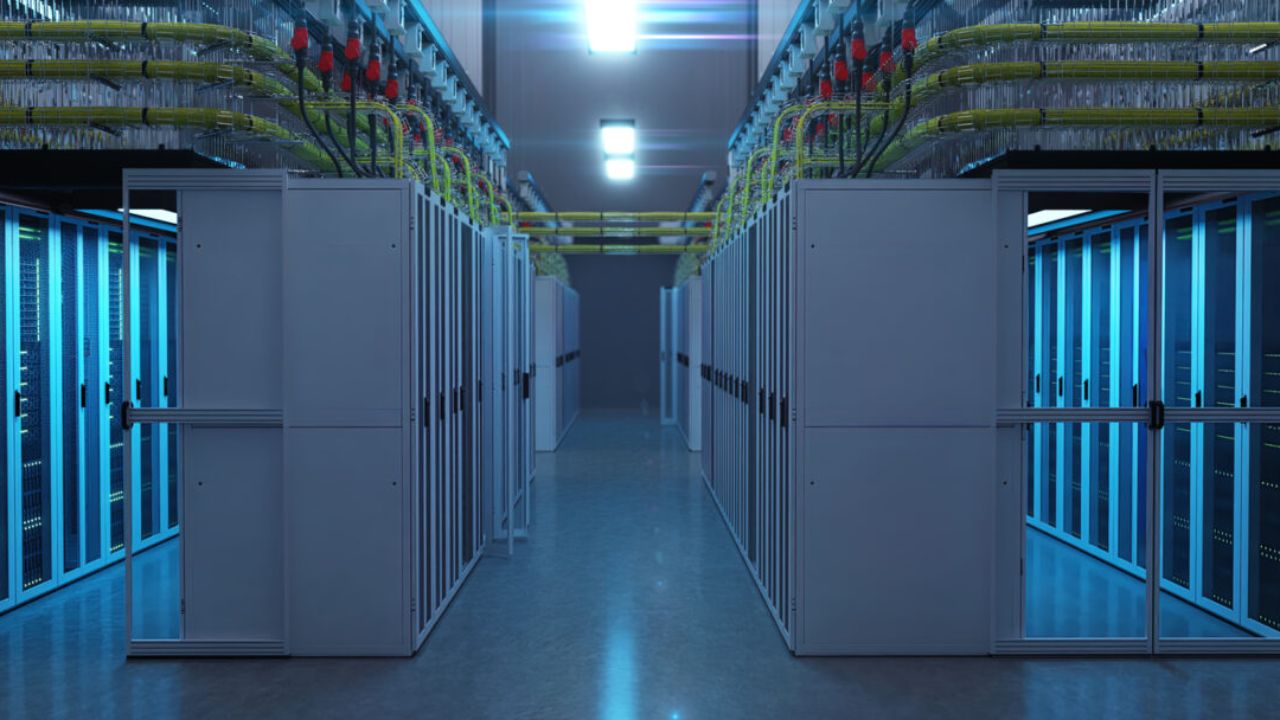
Cold aisle containment is a method of enclosure in the immediate location in front of server racks through which cold air is fed by Computer Room Air Conditioning (CRAC) units. This will ensure that cold supply air does not combine with the hot exhaust air that is flowed out of the servers. The system has a separate cold zone, which guarantees the supply of a constant flow of cold air at the required temperature to the IT equipment and eradicates the inefficiencies of bypassing air or recirculation. However, modern cold aisle containment systems usually come in modular designs like top covers, side panels, and doors that can be customized to the particular pattern and relative density of the data center.
Enhancing Cooling Efficiency
Among the main effects that cold aisle containment has on PUE is the fact that it focuses a lot on the cooling efficiency. In conventional open data centers, CRAC units tend to introduce cold air that, combined with hot exhaust gases, may cause the operating temperature of the servers to increase, and the cooling system to struggle to cool the servers. This mixing is prevented by containment, and CRAC units can be used to work at higher temperatures without affecting the performance of the servers. This lowers the overall amount of energy used by the cooling system, which may comprise a large subdivision of data center energy consumption.
Supporting High-Density Configurations
With data centers becoming more compact in order to have higher-density racks and more computing power, the conventional cooling techniques can frequently fail to keep the temperature levels sufficiently low. The containment of the cold aisle is quite useful in such situations, as cold air is guided in the area where it is most required. The system also maintains even cooling of each and every piece of equipment, despite the most crowded setup, by controlling airflow at the rack level. This control of airflow accuracy minimizes the chance of hotspots that may cause throttling or failure of the servers otherwise, and the cooling capacity over-provisioning, hence decreasing the energy use.
Modular Design and Rapid Deployment
The modern cold aisle containment systems are modularized and can be installed flexibly and deployed in a short time. Elements like sliding doors, rotating doors, and top covers, as well as side panels, can be added in batches, allowing data centers to add or redesign containment without causing considerable downtime. This modularity also facilitates the optimization of energy needs in the process of phased growth to ensure that the containment system is expanded in line with the IT needs. This allows the operators to ensure that an efficient cooling environment is always maintained, and this will help to ensure that the PUE is steadily reduced over time due to the step-by-step implementation.
Integration with Intelligent Systems
The advanced cold aisle containment systems are combined with intelligent control systems to improve the efficiency of operations. The sensor-based door access, automated skylights, and integration to fire protection features are some of the features that ensure that it has a containment that is not only efficient in cooling but also provides safety and operational reliability. These intelligent controls allow the data centers to control temperature, airflow, and energy use in real-time to enable the operators to adjust cooling processes to their highest efficiency. Cold aisle containment achieves a further reduction of wasted energy by means of effective control of airflow and intelligent monitoring, which will also contribute to the minimization of PUE facility-wide.
Conclusion
Cold aisle containment has been a foundational approach towards high-density data centers that seek to maximize energy effectiveness and minimize PUE. These systems enhance cooling performance, forestall hotspots, and offer a reliable supply of air to important IT equipment by physically isolating cold supply air and hot exhaust air. Modular design and smart combination of contemporary containment solutions enable data centers to respond to the rising computing demands with minimum energy losses. Finally, cold aisle containment is not only an operation efficiency but is also an effective way of minimizing the costs of energy, which supports sustainable and high-performance operations of data centers.