Metal Joining Methods: When to Use Welding and When to Use Riveting
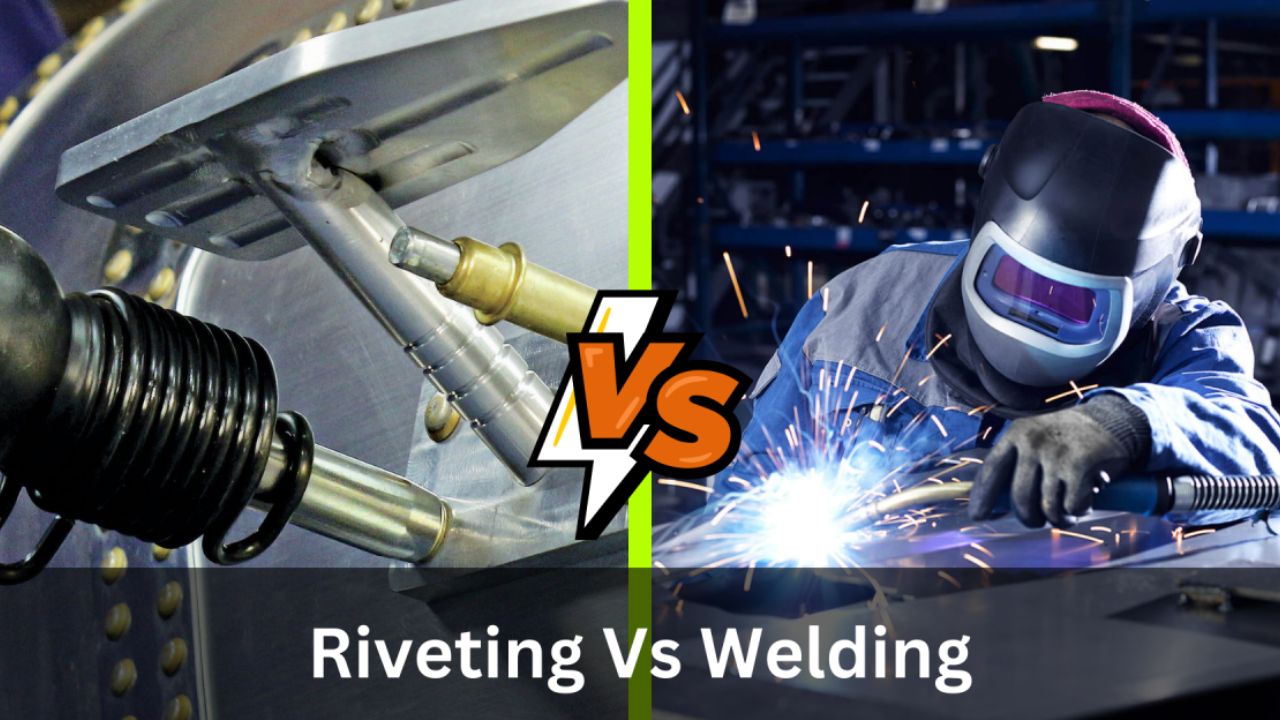
Metal joining is considered one of the most critical decisions in sheet metal fabrication, particularly in custom metal bracket fabrication, where joint performance directly affects structural reliability. The direct connection method applied to components has an impact on strength, durability, appearance, cost, and long-term performance. Welding and riveting of metals are the most popular among the many methods of joining, and are used in most applications of industrial, commercial, and architectural joining. All of these approaches are characterized by certain strengths and limitations, and selecting an inappropriate one may result in the distortion, untimely failure, or unwarranted production expenses. Use of both welding and riveting is carried out on a daily basis at ShincoFab, where the choice is informed by the nature of the materials, design purpose and actual field of operation.
Understanding Welding as a Metal Joining Method
Welding is a process that involves the fusion of metal components in which the metals are melted together. Electricity or gas produces heat in the joint, and a molten pool forms, which hardens into one continuous structure as soon as it cools down. The result of this process is very strong and stiffened connections that act as a single piece of metal. Welding is usually employed when the issues of structural integrity and load-bearing capacity are of the main concern.
Welding is a process that involves the manipulation of the base material by means of heat, and thus it has to be carefully controlled and done by experts. The lack of correct heat management may result in distortion, residual stress or weakened joints. Nonetheless, done properly, welding provides unparalleled strength and durability, and therefore, it is suitable for heavy-duty fabrication.
When Welding Is the Right Choice
Welding is most preferred in applications where maximum strength and rigidity are needed. Structural frames, machinery bases, support brackets, pressure vessels, tanks, etc., are constructed on the basis of heavy loads and stressing, which is supported on welded joints. Welding is also used where airtight or watertight sealing is necessary because the joint of the fusion will eliminate any openings where fluids or gases may leak.
Besides that, welding is frequently used when a smooth look of a seam-free surface is required. Welds may be finished smooth and blended with the surrounding metal, a feature required with visible components. Welding of thick-gauge steel and aluminum components is a common activity in ShincoFab, and on which strength, stability, and longevity cannot be compromised.
Understanding Riveting as a Metal Joining Method
Riveting is a metal craft method used to attach metal components by fastening them together by gluing a rivet and shaping it on the aligned holes. In contrast to welding, riveting is not based on the fusion of heat and the material. It instead holds components together through mechanical force. This cold joining technique maintains the initial material characteristics and surface finishes of the joining components.
Riveting is particularly useful in sheet metal fabrication and where thin materials are used. Lack of heat will also remove the possibility of warping, and it is one that can be used with delicate or already finished parts. Riveting also has a smaller learning curve and is more consistent, even in mass production.
When Riveting Is the Better Option
Riveting is the most common option in the case of thin sheet metal, which may misshape under the welding heat. It is popular in enclosures, panels, housings and also in lightweight assemblies. Dissimilar materials (i.e., aluminum to steel) are also best joined by riveting, as welding would be technically complex or even impossible.
Flexibility is another major benefit of riveting. Rivet joints are able to take more vibrations and movement than the rigid welded joints, which may lead to fatigue cracking. This renders the riveting appropriate to be applied in objects that are subject to dynamic loads, like transport equipment and industrial covers. In ShincoFab, riveting is applied to modular designs and products that might need future disassembling or maintenance.
Conclusion
Welding and riveting are both important metal joining techniques, which are used differently in sheet metal manufacturing. Welding offers better strength, rigidity and sealing to heavy-duty and structural applications. Riveting provides flexibility, compatibility of materials, vibration resistance and heat distortion protection to thin or mixed material assemblies.
In ShincoFab, there is no random choice between welding and riveting. It is founded on the engineering needs, the material behavior, the efficiency of the production process, and the end-use conditions. Knowing the appropriate time to apply welding and when to apply riveting will help manufacturers and designers to develop reliable, economical and high-quality metal products that work as expected during their service life.